
Forex Risk Management in 2026: How to Protect Your Capital
Most traders fail not because they can't read the market. they fail because they can't manage risk. Here's the framework every serious forex trader needs in 2026.
Exness is regulated by the FCA, CySEC, and FSA. Negative balance protection, segregated accounts, and instant withdrawals, built for traders who take risk seriously.
Open Exness Account →Why Risk Management Matters More Than Any Strategy
A winning trading strategy with poor risk management will still blow your account. A mediocre strategy with excellent risk management can keep you in the game long enough to improve. This isn't theory. it's arithmetic. When you lose 50% of your account, you need a 100% gain just to get back to even.
In 2026, with central bank policy divergence, geopolitical uncertainty, and algorithmic trading amplifying moves, volatility is higher than ever. The traders who survive are the ones who treat capital preservation as their first job, and profit generation as their second.
The 1–2% Rule: Your Capital's First Line of Defense
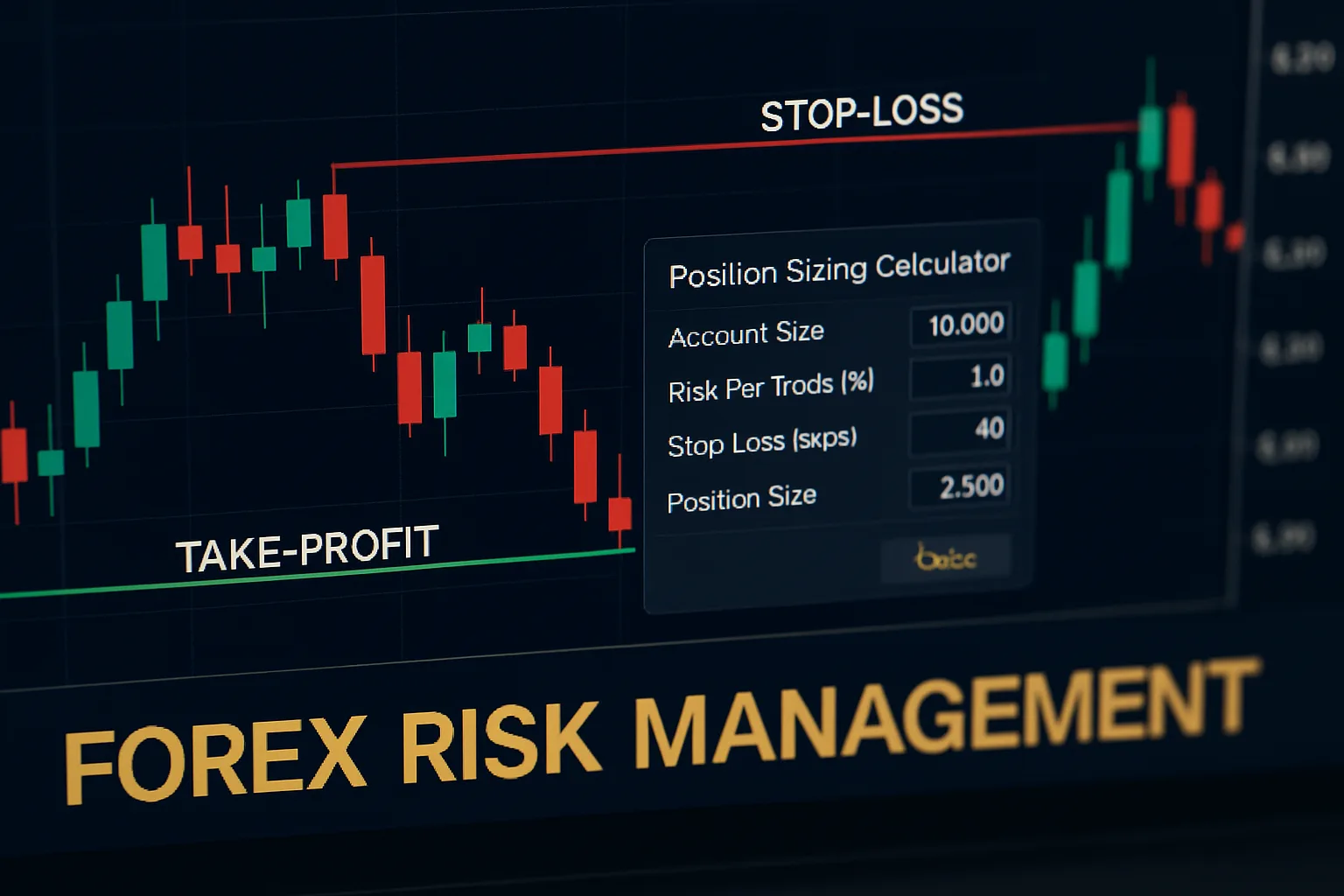
The single most important rule in forex risk management: never risk more than 1–2% of your total account balance on any single trade. This is not a suggestion. it's the foundation of professional trading.
Here's why it works: even if you hit a losing streak of 10 consecutive trades (which happens), you've only lost 10–20% of your account at 1–2% risk per trade. Your account is still alive and tradeable. Risk 10% per trade, and the same losing streak wipes you out.
- $1,000 account: Max $10–$20 risk per trade
- $5,000 account: Max $50–$100 risk per trade
- $10,000 account: Max $100–$200 risk per trade
- $50,000 account: Max $500–$1,000 risk per trade
Many experienced traders use 1% as their default and only flex to 2% on high-conviction setups. Starting at 1% and scaling up as your account grows is the professional approach.
Stop-Loss Placement: Where Most Traders Go Wrong
A stop-loss is not optional. Every trade must have one, set at entry. not after. The question is where to place it. Most beginners set stops based on how much they're willing to lose in dollar terms, which is backwards. Professional traders set stops based on market structure, then calculate position size to match the dollar risk they're willing to take.
Correct approach: Identify the level where your trade thesis is invalidated. a key support/resistance level, above a recent swing high, below a recent swing low. and place your stop there. Then size your position so the distance to that stop equals your maximum dollar risk.
Common stop-loss placement methods:
- Structure-based: Above/below the nearest swing high or low. the most reliable method
- ATR-based: 1.5–2x the Average True Range below entry. accounts for current volatility
- Moving average: Below a key moving average (e.g., 20 EMA). useful in trending markets
- Round number buffer: Just beyond a major psychological level (e.g., 1.0800, 150.00) where stops cluster
Avoid placing stops at exact round numbers. these are where institutional players hunt liquidity. Add a 5–10 pip buffer beyond the obvious level.
Position Sizing Formula
Once you know your risk in dollars and your stop-loss distance in pips, calculating your position size is straightforward:
Pip values vary by pair and account currency. For USD-quoted pairs (EURUSD, GBPUSD), one standard lot = $10/pip. For JPY pairs (USDJPY), one standard lot ≈ $9.30/pip. Most broker platforms include a position size calculator. use it every time.
Risk/Reward Ratios: The Minimum You Should Accept
Risk/reward ratio (RRR) measures how much you stand to gain relative to what you risk. A 1:2 RRR means for every $1 risked, you target $2 in profit. This is the minimum acceptable ratio for most setups.
Here's why a 1:2 minimum is mathematically sound: if your strategy is only right 40% of the time (not great), you still make money with a 1:2 RRR:
- 10 trades × 40% win rate = 4 wins, 6 losses
- 4 wins × $200 = +$800
- 6 losses × $100 = −$600
- Net result: +$200
Always identify your target before entering the trade. Your target should be at a logical level. next key resistance (for longs), next key support (for shorts), a previous swing high/low, or a Fibonacci extension. Do not move your target lower mid-trade just to lock in a smaller profit.
Avoiding Overleveraging: The Account Killer
Forex brokers offer leverage up to 1:500 or higher. This does not mean you should use it. Leverage amplifies both gains and losses proportionally. at 1:500, a 0.2% adverse move wipes your entire position.
Effective leverage. the actual leverage of your open positions relative to your account. should rarely exceed 10:1 for most traders, and never exceed 20:1. For traders managing larger balances where this matters most, our guide to the best forex brokers for large accounts covers platforms with institutional-grade risk controls. Use the 1–2% risk rule, proper stop-losses, and appropriate position sizing, and your effective leverage will naturally stay conservative regardless of what the broker offers.
Red flags that indicate overleveraging:
- Your account fluctuates 5%+ on a single normal trading day
- You feel emotional stress about open positions
- You're averaging down on losing trades hoping they 'come back'
- You're trading multiple correlated pairs in the same direction simultaneously
Using Regulated Brokers for Fund Safety
Risk management doesn't stop at position sizing. The broker you choose is a risk decision. Unregulated brokers can freeze withdrawals, manipulate spreads, or simply disappear with your funds. It happens every year.
Minimum requirements for a trustworthy broker in 2026:
- Tier-1 regulation: FCA (UK), ASIC (Australia), CySEC (EU), or equivalent. See our lists of the best UK-regulated brokers and best Australian brokers for verified options
- Segregated client funds: Your money is kept separate from the broker's operating funds
- Negative balance protection: You can't lose more than your deposit
- Compensation scheme: FSCS (FCA) covers up to £85,000; ICF (CySEC) covers up to €20,000
- Reliable withdrawals: Consistent processing times, no surprise holds
Exness meets all of these criteria. It holds FCA, CySEC, and FSA licenses, maintains fully segregated client accounts, and offers negative balance protection as standard. Instant withdrawals are available 24/7.
Recommended Brokers
All brokers independently reviewed and tested by our team.
Start Trading with Proper Risk Management
Exness: regulated by FCA & CySEC, negative balance protection, instant withdrawals, and tight spreads on 200+ pairs.
Open Exness Account →