
USD Rally 2026: The Forex Pairs Moving the Most Right Now
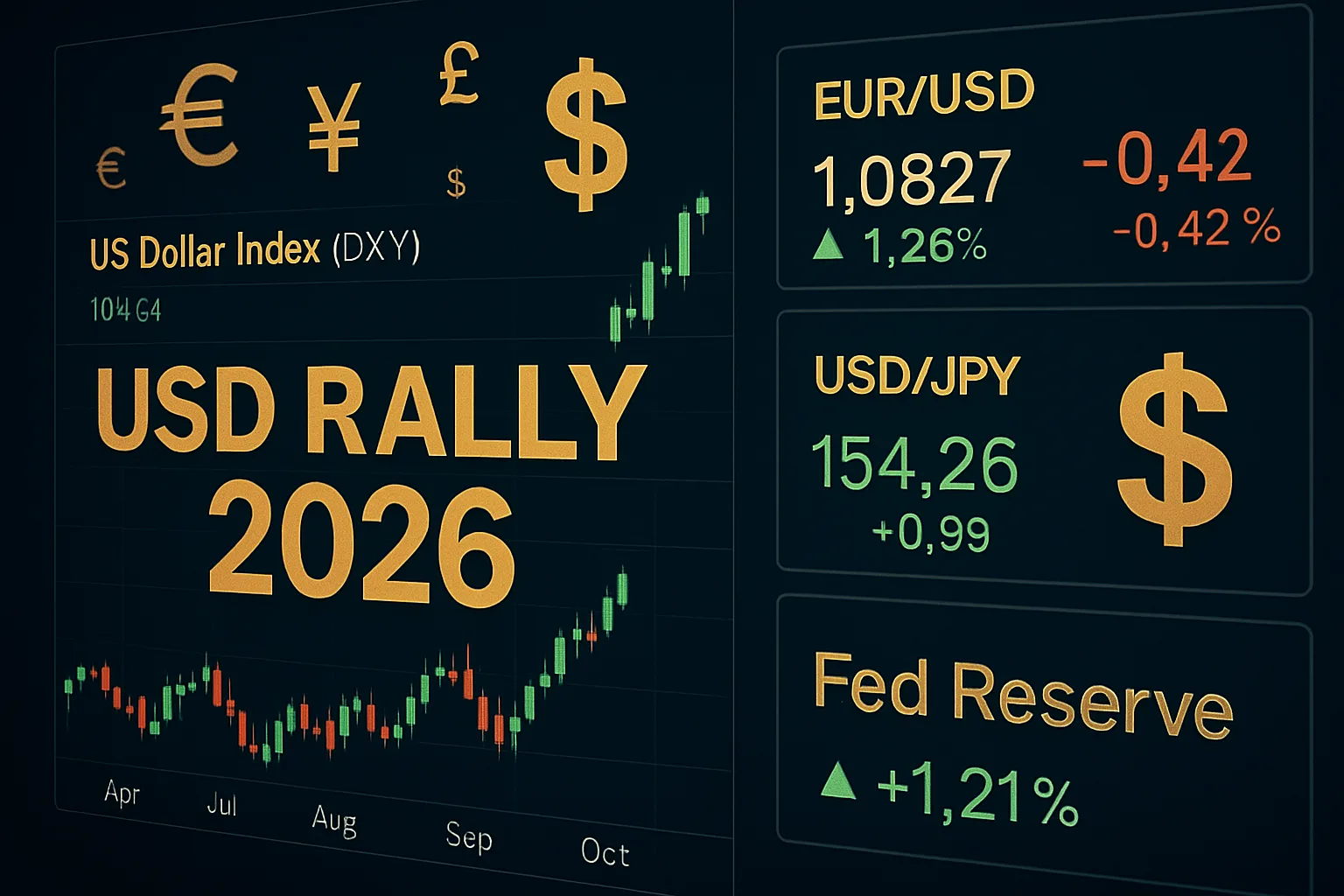
The US Dollar Index hit 107.1 on March 26, 2026. its highest level in 14 months. Fed hawkish hold, collapsing rate-cut bets, and DXY dominance are reshaping the forex landscape. Here's which pairs to watch.
Exness offers EUR/USD from 0.0 pips and USD/JPY from 0.1 pips on Pro accounts. The USD rally is live. get in with the tightest spreads in retail forex.
The Fed Hawkish Hold: Everything Changed on March 18
The Federal Reserve's March 18, 2026 FOMC decision didn't surprise markets with a rate hike. but it surprised them with the tone. Chair Powell described the US economy as “resilient” and inflation as “not yet at the 2% target in a sustained way.” Rate cut expectations for 2026 effectively evaporated overnight.
Before March 18, interest rate futures were pricing in two 25-basis-point cuts in 2026. Today, they price in zero cuts. and some analysts are now discussing the probability of another hike if April CPI surprises to the upside. This is not a small shift. This is a full repricing of the US interest rate curve, and the forex market is reacting accordingly.
The DXY. which measures the dollar against a basket of six major currencies. has risen from 102.3 on February 15 to 107.1 on March 26. That's a 4.7% move in the world's most liquid financial instrument. In forex terms, 4.7% is enormous.
Forex Pairs Snapshot: March 26, 2026
| Pair | Current Price | 30-Day Move | Bias |
|---|---|---|---|
| EUR/USD | 1.0720 | -2.1% | Bearish |
| USD/JPY | 152.8 | +2.2% | Bullish |
| GBP/USD | 1.2540 | -1.8% | Bearish |
| AUD/USD | 0.6280 | -3.1% | Bearish |
| USD/CAD | 1.4380 | +2.8% | Bullish |
| USD/CHF | 0.9140 | +1.9% | Bullish |
EUR/USD: The Most Watched Pair
EUR/USD has broken through multiple support levels since February and now trades at 1.0720. the lowest since November 2025. The European Central Bank has already cut rates twice in 2026 (January and March), bringing the ECB deposit rate to 2.75%. The Fed–ECB rate differential now stands at 75–100 basis points in favor of the USD, driving relentless demand for dollars over euros.
Key levels: Support at 1.0650 (September 2025 lows). Resistance at 1.0850 (broken support, now resistance). The path of least resistance is lower as long as the Fed stays hawkish. A daily close above 1.0850 would signal a potential reversal.
For active traders: EUR/USD remains the #1 pair by volume and has the tightest spreads at virtually every broker. Exness offers 0.0 pips on EUR/USD; Axi averages 0.1 pips on their Xtend account.
USD/JPY: The Carry Trade King
USD/JPY at 152.8 is in intervention danger territory. The Bank of Japan hiked rates to 0.75% in January 2026 and has since maintained that level, but even at 0.75%, the US-Japan rate differential exceeds 275 basis points. one of the largest in the developed world. This makes USD/JPY the ultimate carry trade: borrow yen at near-zero rates, buy dollar-denominated assets.
The risk: Japan's Ministry of Finance has repeatedly intervened above 152–155 since 2022. If USD/JPY pushes toward 155, traders should expect verbal warnings first, then potential unilateral FX intervention. This makes long USD/JPY trades high-reward but with a hard tail risk ceiling around 155–158.
AUD/USD: The Biggest Loser
AUD/USD has fallen 3.1% in 30 days to 0.6280, making it the worst-performing major currency against the dollar. Australia's commodity-linked economy is exposed to slower Chinese growth (iron ore demand), and the Reserve Bank of Australia has been more dovish than the Fed, cutting rates in February 2026. The RBA/Fed divergence, combined with risk-off sentiment from gold's crash, is crushing AUD.
AUD/USD targeting 0.6100 next if DXY holds above 106. Support at 0.6200. a break below opens 0.6050.
Trading Strategy: Riding the USD Trend
The highest-probability approach in the current environment:
- Sell EUR/USD rallies: Use 1.0800–1.0850 as a short entry zone with a stop at 1.0900. Target 1.0650.
- Buy USD/JPY dips: Entries on pullbacks to 151.0–151.5, stop below 150.0, target 154.0. But watch for BoJ intervention signals above 153.
- Sell AUD/USD bounces: 0.6350 offers a strong short entry. Target 0.6100, stop 0.6420.
- Catalyst watch: April 3 NFP and April 10 CPI are the next major USD drivers. Strong data accelerates the rally.
Best Brokers for USD Pair Trading
When trading volatile USD pairs during a DXY trend, execution speed and tight spreads are critical. Two brokers stand out:
- Exness: EUR/USD from 0.0 pips on Pro, USD/JPY from 0.1 pips. Unlimited leverage on select accounts. Instant withdrawals.
- Axi: Tight spreads on all major USD pairs, MT4/MT5 platforms, regulated in Australia (ASIC) and UK (FCA). Excellent for swing traders.
Recommended Brokers
All brokers independently reviewed and tested by our team.